
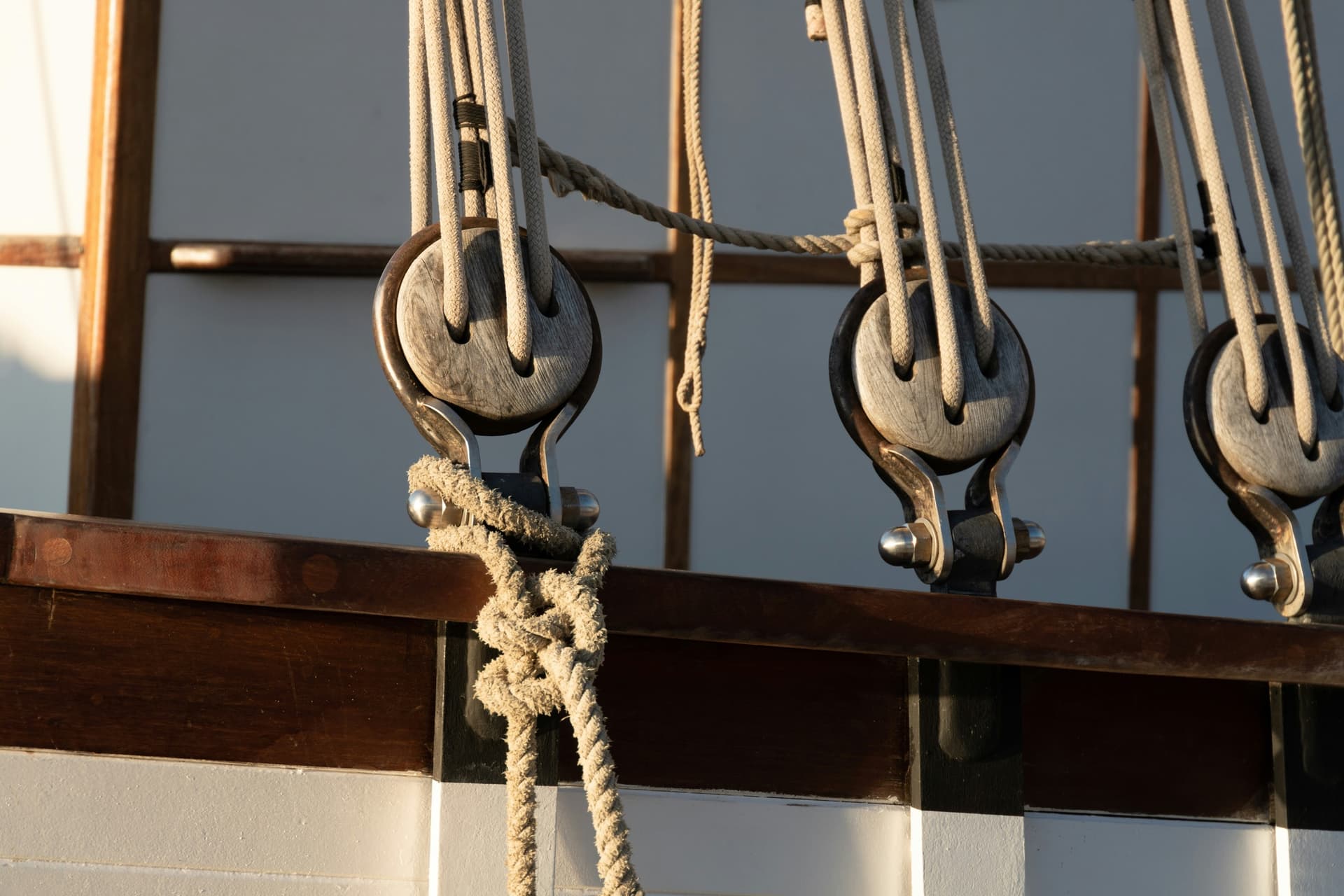
Photo: Benoît Deschasaux on Unsplash
Sailboat block types, explained
Blocks look alike and do very different jobs. This guide covers what each type is, what its bearing is for, and how it attaches. Every factual statement links to the page it came from, and nearly all of those are the manufacturers' own.
This guide links to products on Amazon. If you buy through those links we may earn a commission, at no extra cost to you. Each one is marked “paid link”. More in our affiliate disclosure.
Published October 9, 2026
What a block does
The types
Cheek block
Mounts flush against a deck, mast or boom, horizontally or vertically, fixed with screws or bolts.[6]
Stand-up block
Sits on a spring or a flexible rubber or PVC boot that holds it upright when the line is not loaded, so it does not fall onto the deck.[10]
Soft-attach block
Uses a fibre lashing or loop, often Dyneema, in place of a metal shackle. Harken warns that soft attachments wear, and recommends them only for regularly maintained race boats.[2]
Features any type can have
Bearings
Ball-bearing blocks give the lowest friction and suit lines that run under moderate, dynamic loads.[13]
Roller-bearing blocks carry higher loads than ball-bearing blocks and are still low-friction, though ball bearings are lower-friction still.[2]
Plain-bearing (sleeve or bushing) blocks have more friction than ball- or roller-bearing blocks, but handle very high and static loads.[2]
Harken fits sleeve bearings to its cruising blocks to handle high static loads, and calls them ideal for halyards.[14]
Some ranges come in more than one bearing. Ronstan's Series 40 Utility blocks are sold with ball-bearing sheaves, plain acetal sheaves, or a Nylatron sheave that also works with wire.[15]
Heads and attachments
Block heads include fixed (non-swivel) shackles, swivel shackles, snap shackles, swivel eyes, soft lashings or loops, and bolt-down bases for cheek and foot blocks. Some small blocks also come with hooks.[16]
Some shackle blocks can be locked in either of two directions, or left free to swivel so the line does not twist.[17]
Reading a model name
Harken sizes many of its blocks by sheave diameter in millimetres. Carbo blocks come in 29, 40, 57 and 75 mm sheave sizes, and the size is in the name: the 57mm Ratchet Block has a 57 mm sheave.[11]
In the Ronstan ranges we checked — Series 20, 30, 40 and 55 — the series number matches the sheave diameter in millimetres. Treat that as a pattern, not a rule.[12]
What this guide leaves out
Which size of block you need depends on the diameter of your line and the load it carries. Those are safety figures, and we have not yet sourced a method for working out block loads that we are willing to publish. We will add a sizing guide when we have — until then, check the maker's own sizing tables for the block you are looking at.
Blocks we list
 Harken · Deck Hardware
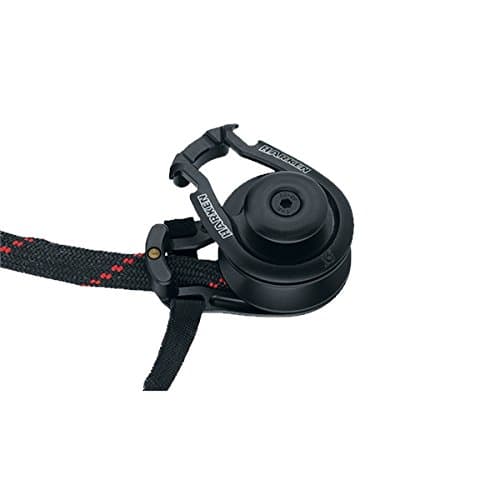
Harken Snatch Block
The side plate opens, so it goes onto a line that is already rigged without feeding the line through from one end. Harken and Ronstan both describe the job the same way: temporary leads, and deflecting a line where it would otherwise chafe or lead badly.
View on Amazonpaid link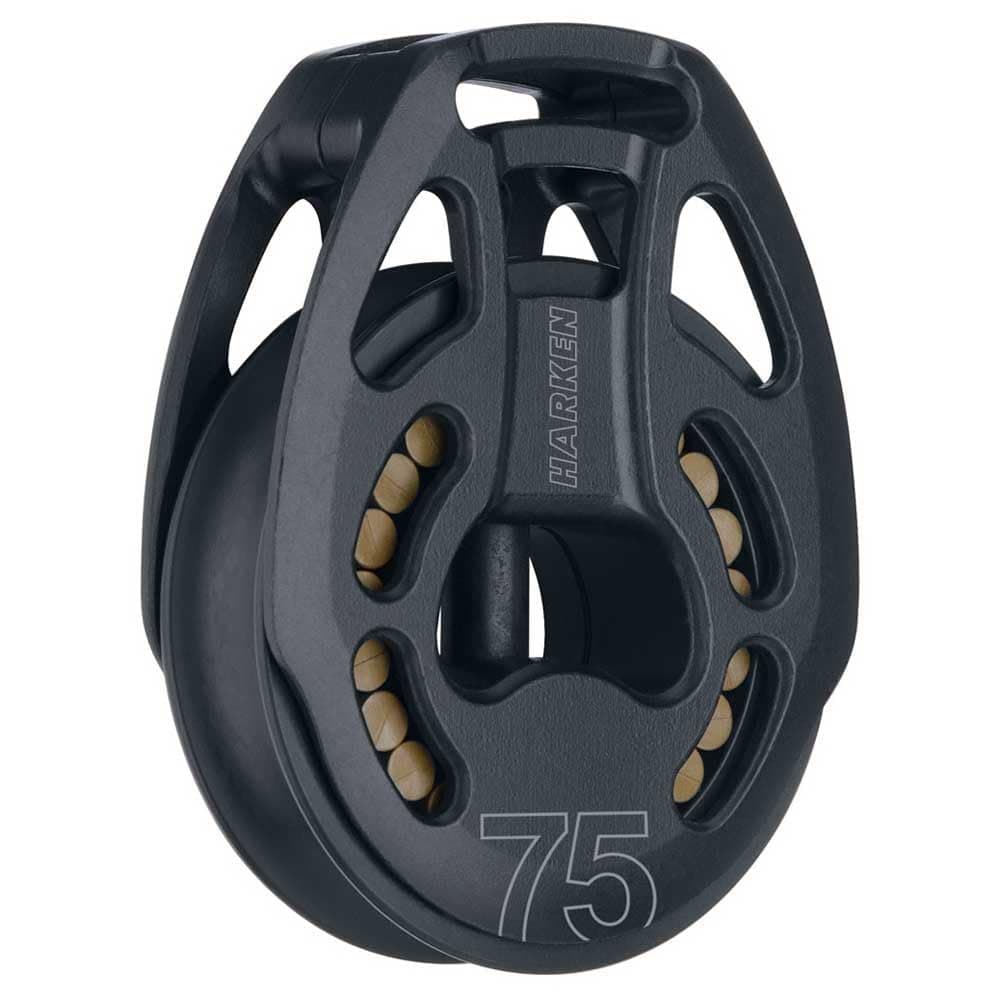 Harken · Deck Hardware
Harken Black Magic Air Block
Harken builds these for big-boat sail controls that work hard — their own list is mainsheet, runner, halyard and spinnaker systems. They are made to be serviced: few parts, no loose balls or rollers to lose, and they come apart with a single hex wrench instead of being riveted.
View on Amazonpaid link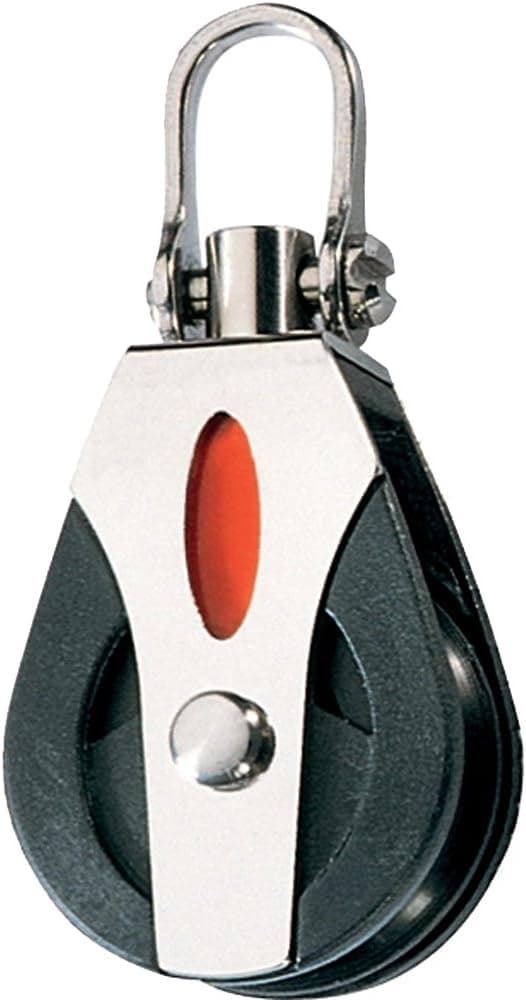 Ronstan · Deck Hardware
Ronstan Series 20 Ball Bearing Block
A small ball-bearing block. Ball bearings give the lowest friction of any block bearing and suit lines that run under moderate, changing loads — the opposite job to a halyard block, which sits under heavy static load and is usually plain-bearing for that reason.
View on Amazonpaid link
Sources
- 1.Ronstan — How to choose the right sailing block
- 2.Harken — Glossary of terms
- 3.Fisheries Supply — Sailboat blocks(retailer guide)
- 4.Harken — Snatch blocks
- 5.Ronstan — All-purpose snatch blocks
- 6.Barton Marine — Size 0 cheek blocks
- 7.Harken — Footblocks
- 8.Harken — Ordering Big Boat blocks
- 9.Harken — Mastbase blocks
- 10.Harken — Stand-up bases
- 11.Harken — 57mm Ratchet Block, swivel, becket
- 12.Ronstan — Series 55 Orbit block, single, becket, swivel
- 13.Seldén — Ball-bearing blocks
- 14.Harken — Cruising ESP blocks
- 15.Ronstan — Series 40 Utility blocks
- 16.Ronstan — Series 30 Orbit ball-bearing blocks
- 17.Harken — Carbo Air blocks